Green Manures and Crop Rotation for the Italian Vegetable Garden

A reference on cover crops suited to small plots across Italy—from the Po Valley to Campania. Covers species selection, seasonal sowing, and the practical effects on soil structure over successive growing cycles.

Crimson clover field along the Brenta river, Veneto, Italy

Articles

Selected topics on green manures, rotation sequencing, and soil biology for small-scale growers in Italy.

Why Cover Cropping Matters on Small Plots

On gardens measured in square metres rather than hectares, every bed and every season counts. Cover crops perform several roles simultaneously.

Nitrogen Fixation

Legume cover crops—vetches, clovers, and fava beans—host nitrogen-fixing bacteria in root nodules. When incorporated, this fixed nitrogen becomes available to the following vegetable crop, reducing or eliminating the need for supplemental fertiliser.

Erosion and Weed Control

A closed canopy prevents soil erosion from winter rains and suppresses weed germination. On slopes common in Italian hill gardens, this can make a measurable difference to topsoil retention between October and March.

Soil Structure

Deep-rooted species like tillage radish and phacelia break up compacted layers, improving drainage and aeration. Over several seasons, cover crop residues increase organic matter and support earthworm populations.

Rotation Discipline

Inserting a cover crop phase forces a pause in vegetable production that breaks pest and disease cycles. It is particularly useful in small gardens where rotating vegetable families between beds is geometrically constrained.

Pollinator Support

Flowering species such as phacelia and borage attract beneficial insects. On small plots close to other gardens, this can raise pollination rates for fruiting vegetables in adjacent beds during the following season.

Regional Adaptability

Italy spans multiple climate zones from Alpine north to Mediterranean south. Cover crop choices and sowing windows differ substantially between Friuli and Sicily. Regional context is central to every recommendation on this site.

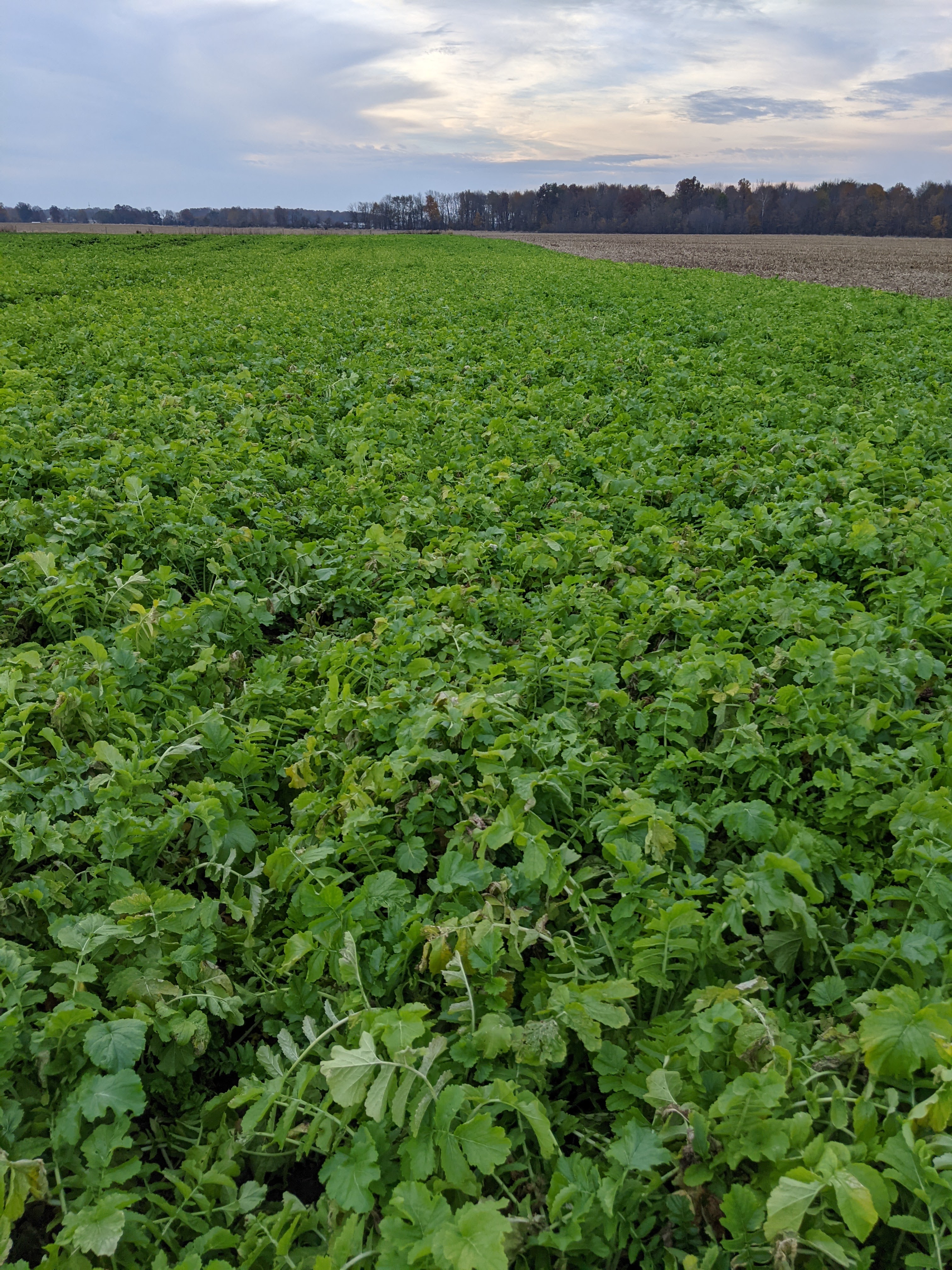
Mixed cover crops growing in a farm field

Fitting Cover Crops into an Existing Rotation

Most small Italian vegetable gardens follow an informal rotation based on what was planted last year. Integrating cover crops does not require redesigning the entire garden; it requires identifying the right windows.

The gap after an early summer harvest—broad beans, garlic, or early potatoes cleared by July—leaves several weeks before winter vegetables go in. That window is long enough for a fast-growing brassica or phacelia to establish, flower briefly, and be incorporated.

  • Sow immediately after clearing the preceding crop
  • Mow or cut when flowering begins, before seed set
  • Incorporate or leave as mulch depending on the following crop
  • Wait two to three weeks before transplanting to allow decomposition
Sowing timing in detail →

Contact

For questions about the content on this site or to report an inaccuracy, use the form. Responses are not guaranteed but corrections to factual errors are addressed as quickly as possible.

ClearfieldGoods
Via Roma 14, 50123 Florence, Italy
info@clearfieldgoods.eu