Sowing Timing and Rotation in Small Gardens
Updated
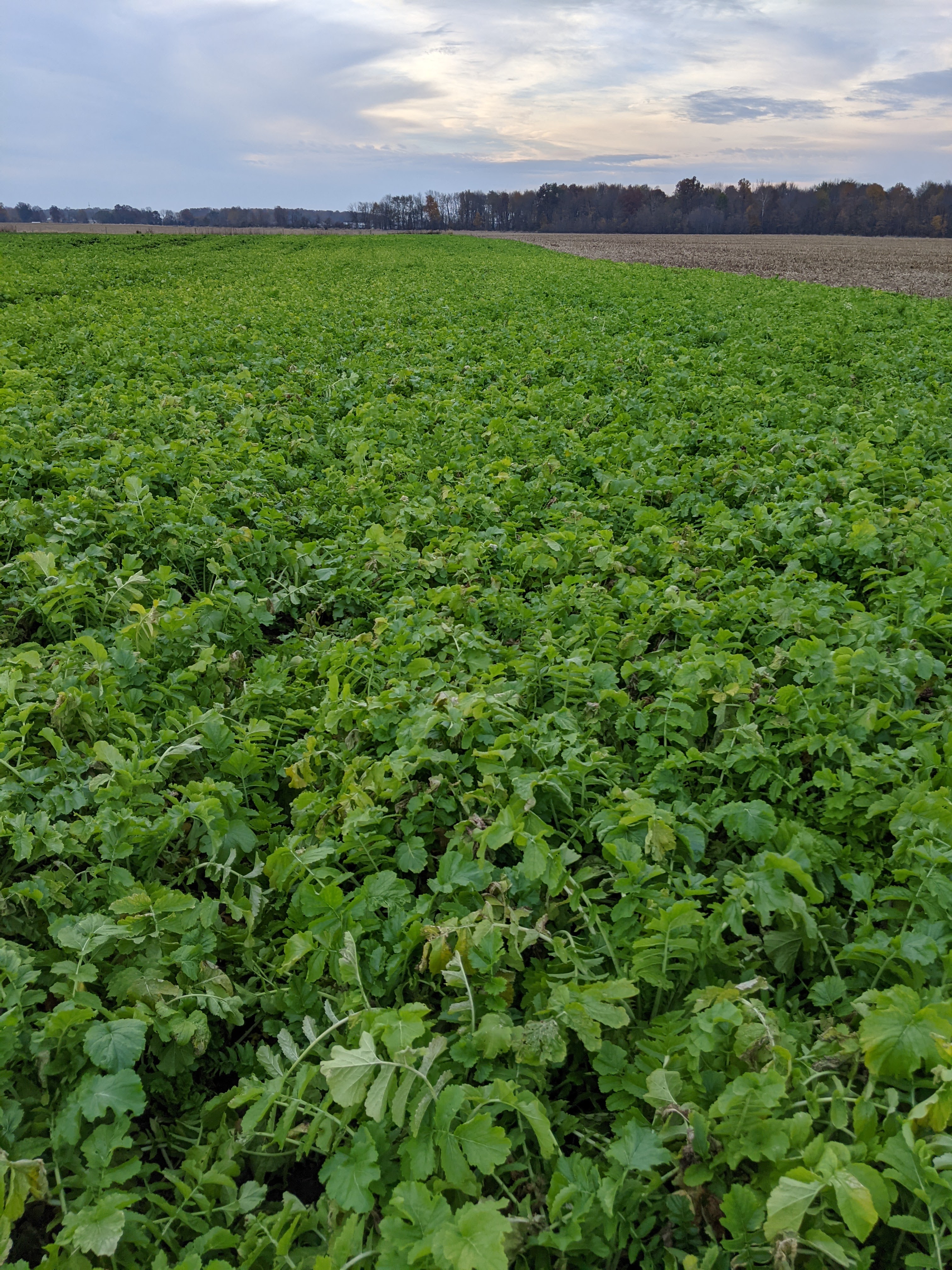
Cover cropping in a small garden does not require its own dedicated beds or a separate growing calendar. It works within the gaps that already exist between vegetable crops—provided those gaps are identified in advance and used deliberately. The challenge in Italian kitchen gardens is that those gaps are seasonal, short, and vary by climate zone. This article looks at when cover crops fit, how long they need to establish, and how a four-bed rotation can accommodate them without displacing vegetable production.
The Gaps in a Typical Italian Vegetable Garden
A small Italian vegetable garden, typically between 20 and 100 square metres, usually runs two main growing seasons: a warm season from April or May to September, and a cool season from October to March or April. The transition points between these seasons are where cover crops enter the picture.
Post-Summer Gap (August to October)
After summer crops—tomatoes, courgettes, aubergines, and peppers—are cleared in late August or September, there is usually a four to eight week gap before autumn transplants go in. In northern Italy, this gap runs from late August to mid-October. In the south, it may extend to November. This is the most practical window for a short-duration cover crop.
Species that fit this window:
- White mustard (six to eight weeks from sowing to incorporation)
- Phacelia (six to ten weeks)
- Tillage radish (eight to twelve weeks)
- Oats (twelve to sixteen weeks, may overwinter in southern Italy)
Post-Winter Gap (March to May)
Beds cleared of overwintered vegetables in February or March may remain empty until warm-season transplants go in during late April or May. This is a suitable window for fast-growing spring cover crops that can be incorporated two to three weeks before transplanting.
In this window, phacelia and Persian clover (Trifolium resupinatum) establish quickly. Crimson clover sown the previous autumn is already established and can be incorporated in April when it reaches full flower.
Summer Fallow (in the South)
In Sicily, Sardinia, and parts of Calabria, the summer is too hot and dry for most vegetables. Beds that would otherwise lie bare from June to September can carry a drought-tolerant cover crop such as cowpea (Vigna unguiculata) if irrigation is available, or be managed with a mulch from the previous cover crop's residue.
Avoid letting a cover crop reach seed set on a small garden. Once it seeds, it becomes a future weed. Cut or incorporate when the first flowers open.
A Four-Bed Rotation with Cover Crops
A four-bed rotation assigns vegetable families to beds in a sequence that prevents disease and nutrient depletion. Cover crops fit into this system as a fifth element that occupies a bed for part of a season rather than an entire one.
A practical four-bed sequence in central Italy (Tuscany or Umbria climate) might look as follows:
| Bed | Spring – Summer | After Clearance | Autumn – Winter |
|---|---|---|---|
| Bed A | Solanaceae (tomato, pepper) | Phacelia or mustard (Sep–Oct) | Incorporate Nov; leave bare or mulched |
| Bed B | Cucurbits (courgette, cucumber) | Hairy vetch + winter rye (Sep) | Overwinter; incorporate April |
| Bed C | Brassicas (cabbage, broccoli) | Winter onions or garlic transplanted Oct | Garlic; cleared May |
| Bed D | Legumes (beans, peas) | Tillage radish (Aug–Sep) | Root decomposes; bed ready for roots in spring |
Each year the rotation advances by one bed, so the cover crop phase also rotates. After four years, every bed has received a nitrogen-fixing legume cover, a brassica cover, a deep-rooted cover, and a direct vegetable winter crop.
Incorporation Timing and Method
Incorporation is the point at which cover crop biomass is cut and turned into the soil. Timing matters for two reasons: early enough to allow decomposition before the next vegetable crop, and late enough to maximise biomass and nitrogen accumulation.
Practical guidelines:
- Legumes: incorporate at early flowering, not later. Nitrogen in above-ground tissue is highest before seed set, and decomposition proceeds faster from younger tissue.
- Cereals: incorporate when plants are still green but have reached sufficient height, typically 40 to 60 cm. Older, lignified stems decompose slowly and can impede transplanting.
- Brassicas: chop finely and incorporate immediately if biofumigation is the goal. The volatile glucosinolate compounds responsible for the fumigant effect disperse quickly if the soil surface is left open.
On small plots, a spade or fork is sufficient for incorporation. Turn the cover crop vegetation under to a depth of 15 to 20 cm. Wait at least two to three weeks before transplanting into that bed, and four to six weeks if the cover crop biomass was high. During decomposition, soil microbes temporarily immobilise available nitrogen, which can stress transplants set in too early.
Sowing Methods for Small Plots
On areas of a few square metres, seed is most practically broadcast by hand and raked in lightly. For finer-seeded species such as phacelia and white mustard, a light dressing of compost over the seed after broadcasting improves germination contact. For larger seeds like field beans and vetches, a dibber or finger-pushed hole gives reliable establishment.
After sowing, water the bed if dry weather follows. Most cover crops need consistent moisture during the first two to three weeks to establish well. Once rooted, they require no additional inputs.